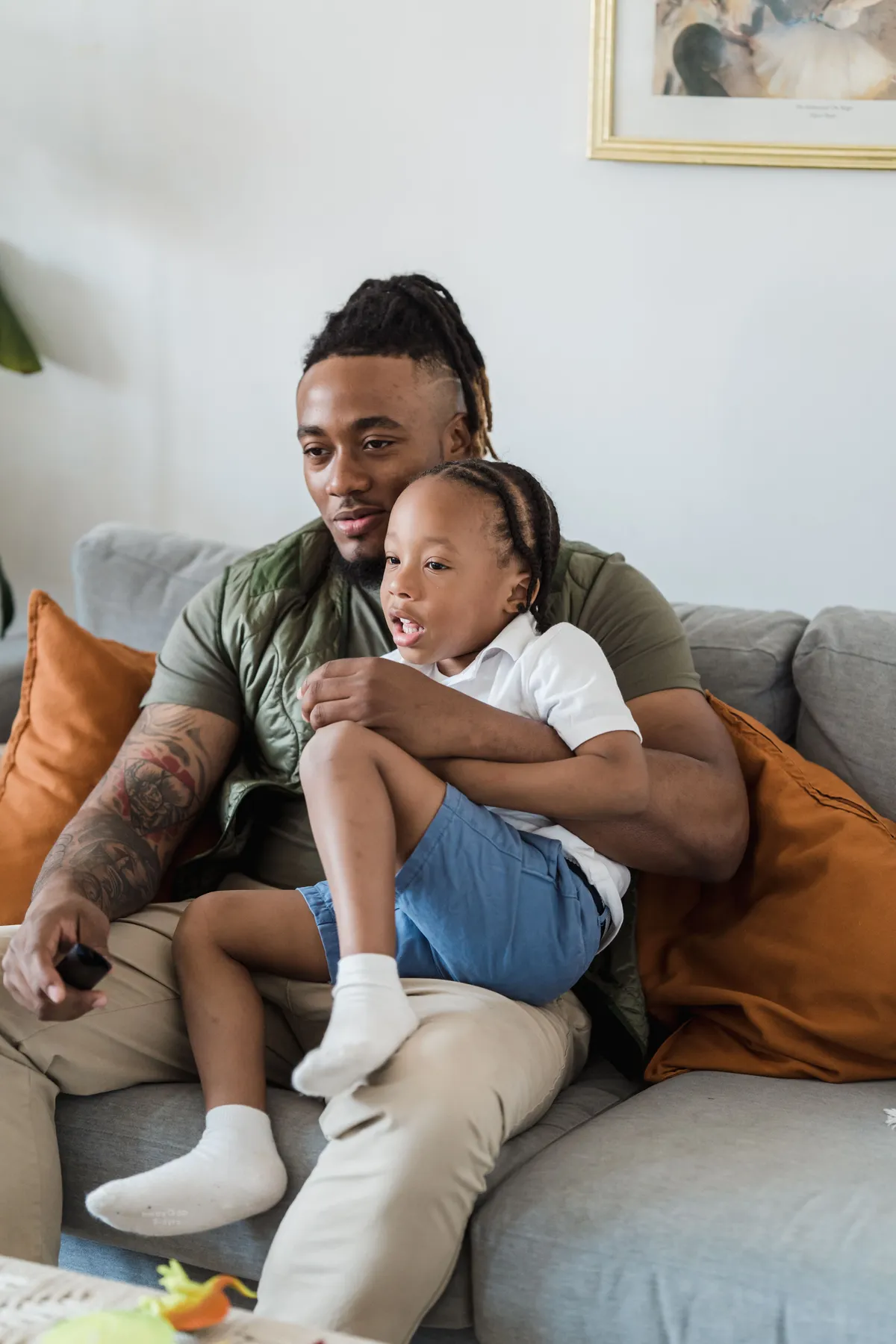
Should preschoolers see racism on TV? Many Black parents might say yes. When handled thoughtfully, age-appropriate stories about racism may help Black children understand and cope with racist experiences.
As parents, we often try to shield our children from painful things. When something hurtful happens, the reflex can be to steer them away from the hard stuff. But when the painful thing is racism, it may be better to address it, even at a very young age.
Parents want stories that reflect reality
In a recent study published in the Journal of Children and Media, AnneMarie K. McClain found that most of the 310 U.S. Black parents she surveyed wanted their children’s media to include stories that acknowledge racial discrimination, particularly the forms children are more likely to encounter today rather than those confined to history.
The picture becomes even clearer when parents are asked how they would respond after a real-life incident. In an article in Human Communication Research, McClain and her colleague Marie‑Louise Mares report on an experiment in which they asked 498 U.S. Black parents of preschoolers, preadolescents, and teenagers to imagine that their child had just experienced racism from a peer and then choose what they would have their child watch next. Parents tended to choose a story about racial pride or racism rather than a neutral show, with very little difference by child age.
Media as a tool for racial socialization
These findings suggest that many Black parents see media as a way to help children process racist experiences, while also helping them feel proud of who they are, less alone, and better prepared for future bias. Developmental psychologists refer to this as racial socialization.
So, should preschoolers see racism on TV? Many Black parents might say yes, but only if it is handled thoughtfully. They prefer stories that reflect situations children may encounter in everyday life, make it clear that racism is wrong, and show constructive ways of responding to it. At the same time, they want these stories to sit alongside joyful, everyday portrayals of Black life and positive Black role models, so that racism is not the only message children receive about what it means to be Black.
What does this mean for children’s media?
For media platforms and content creators, the findings suggest there is value in investing in thoughtful, age-appropriate stories that help children understand and process racism, while also celebrating the richness and joy of everyday Black life. Creating these stories should involve Black writers, creators, and families whose lived experiences can help ensure they are authentic and meaningful.
Want to learn more? Watch this interview with AnneMarie McClain, Assistant Professor of Media Science at Boston University.