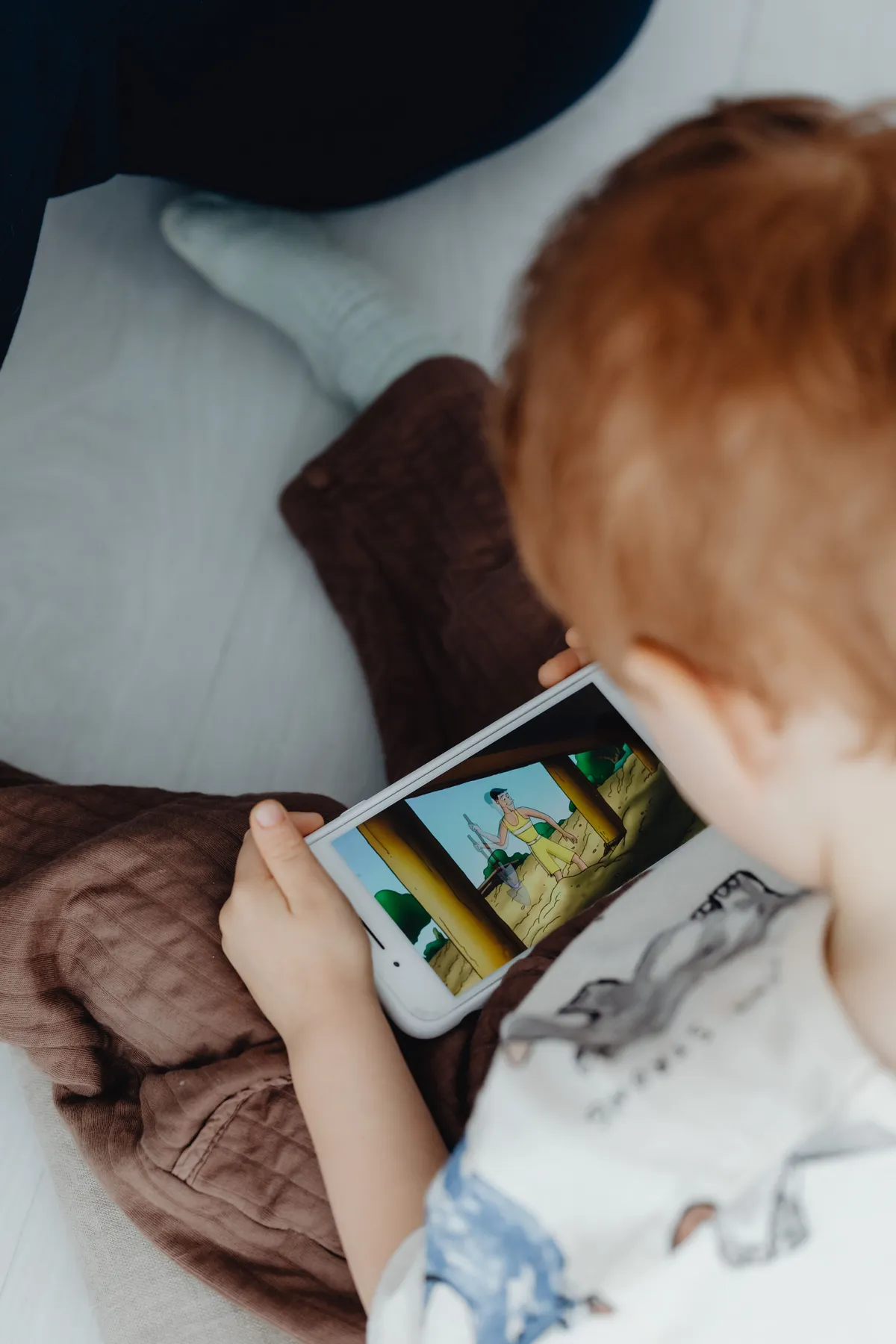
Why do some toddlers end up with gentle, educational videos while others get a stream of noisy, toy‑ and candy‑filled clips? A new study of 2‑year‑olds suggests the answer lies less in the children themselves and more in their family circumstances.
What do toddlers watch on YouTube?
YouTube has quietly become one of the main ways toddlers watch videos, but we still know surprisingly little about what very young children actually see there. To help fill that gap, researchers from the University of Michigan looked closely at the YouTube and YouTube Kids viewing of 2‑year‑olds. The results of their study were published in the journal Infancy.
The team followed 361 families with toddlers and collected links to more than a thousand videos the children had recently watched. They rated each video for how attention-grabbing it was (flashing colours, sound effects and constant movement), how commercial it was (brands, toys and treats), and whether it offered educational content or positive role models.
The results were striking. Almost half the videos focused on toys, parties and candy, while nearly 40% were packed with extra visual and audio tricks designed to keep children watching. Only a small share offered rich educational content or strong role models.
How did family circumstances shape what toddlers watched?
The researchers also found that family circumstances mattered. Toddlers in families experiencing circumstances associated with greater stress, such as unemployment, single parenthood or parental depression, were more likely to use YouTube. At the same time, toddlers from higher-income households tended to watch more educational videos with more positive role models. The authors suggest these two findings may be connected. Parents who are stretched thin may have less time and energy to search for suitable content, making them more reliant on whatever the recommendation feed serves up.
The quality of a toddler’s YouTube feed says more about the situation of the grown‑ups and the algorithm than about the child.
Why does this matter?
These findings suggest that the quality of a toddler’s YouTube experience depends not only on what they like to watch, but also on their family’s circumstances and how easy it is for parents to navigate a platform built to maximize viewing time. This means higher-quality content appears to cluster around better-resourced families. When that happens, YouTube stops being a level playing field and starts widening the gap between children’s media experiences.
Rather than telling individual parents to simply “do better”, these findings point to a bigger job for children’s media platforms: to make sure that developmentally sound, non-exploitative content is the default for toddlers, not something only well-resourced families are likely to find.